


Why Do Good Fabric Scissors Cost So Much? What You're Actually Paying For

Walk into almost any craft store and you'll find fabric scissors ranging from under $20 to well over $200. At first glance, they all seem to do the same thing. They have two blades, two handles, a pivot. So why can one pair cost ten times more than another?
It's one of the questions we're asked most often at trade shows, and the answer has surprisingly little to do with branding. Premium fabric shears cost more because they're built differently from the very beginning, starting with the raw materials and ending with the final hand adjustments that determine how they cut. Once you understand what goes into making a quality pair of fabric scissors, the price starts to make much more sense.
It Starts With the Steel
Every pair of scissors begins as steel, but not all steel is created equal. The raw material used to manufacture fabric shears has a significant impact on everything that follows, including how sharp the blades become, how long they stay sharp, how resistant they are to wear, and even how difficult they are to manufacture.
Lower-priced scissors often use inexpensive materials that are easy to stamp and assemble using automated machinery. Premium manufacturers typically choose higher-quality steels that demand considerably more skill to shape and finish. The steel itself is one of the biggest contributors to the overall cost of a quality pair of fabric shears.
Better Steel Requires Better Craftsmanship
Many people assume expensive scissors cost more simply because of the material. In reality, the material is only part of the story. Different steels behave very differently during manufacturing. Carbon steel, stainless steel, and high carbon stainless steel each respond differently to grinding, sharpening, polishing, and heat treatment.
Because of this, experienced manufacturers often specialize in working with a particular type of steel. Rather than producing every model the same way, artisans develop expertise working with one material, refining techniques that bring out the best performance from that specific metal. This kind of specialized craftsmanship can't easily be replaced by automation.
Precision Is Built Into Every Detail
When most people compare scissors, they focus on sharpness. Sharpness certainly matters, but it's only one part of what creates an exceptional cutting experience.
Premium fabric shears are also carefully engineered through features such as:
- Hollow-ground blades that reduce friction
- Balanced weight distribution
- Comfortable handle geometry
- Strong, stable pivots
- Carefully adjusted blade tension
Each of these elements requires additional manufacturing time and quality control. Individually, they may seem like small details, but together, they're what transform cutting from something that feels tiring into something that feels almost effortless.
Longevity Changes the Equation
A quality pair of fabric shears isn't designed to be replaced every few years; they're designed to become part of your toolkit for decades.
Premium scissors can usually be professionally sharpened many times throughout their lifespan, allowing them to continue performing long after inexpensive scissors have been discarded. That's why we believe in offering free sharpening on all of our tools. Over years of sewing, quilting, or garment making, investing in one excellent pair often costs less than repeatedly replacing lower-quality tools.
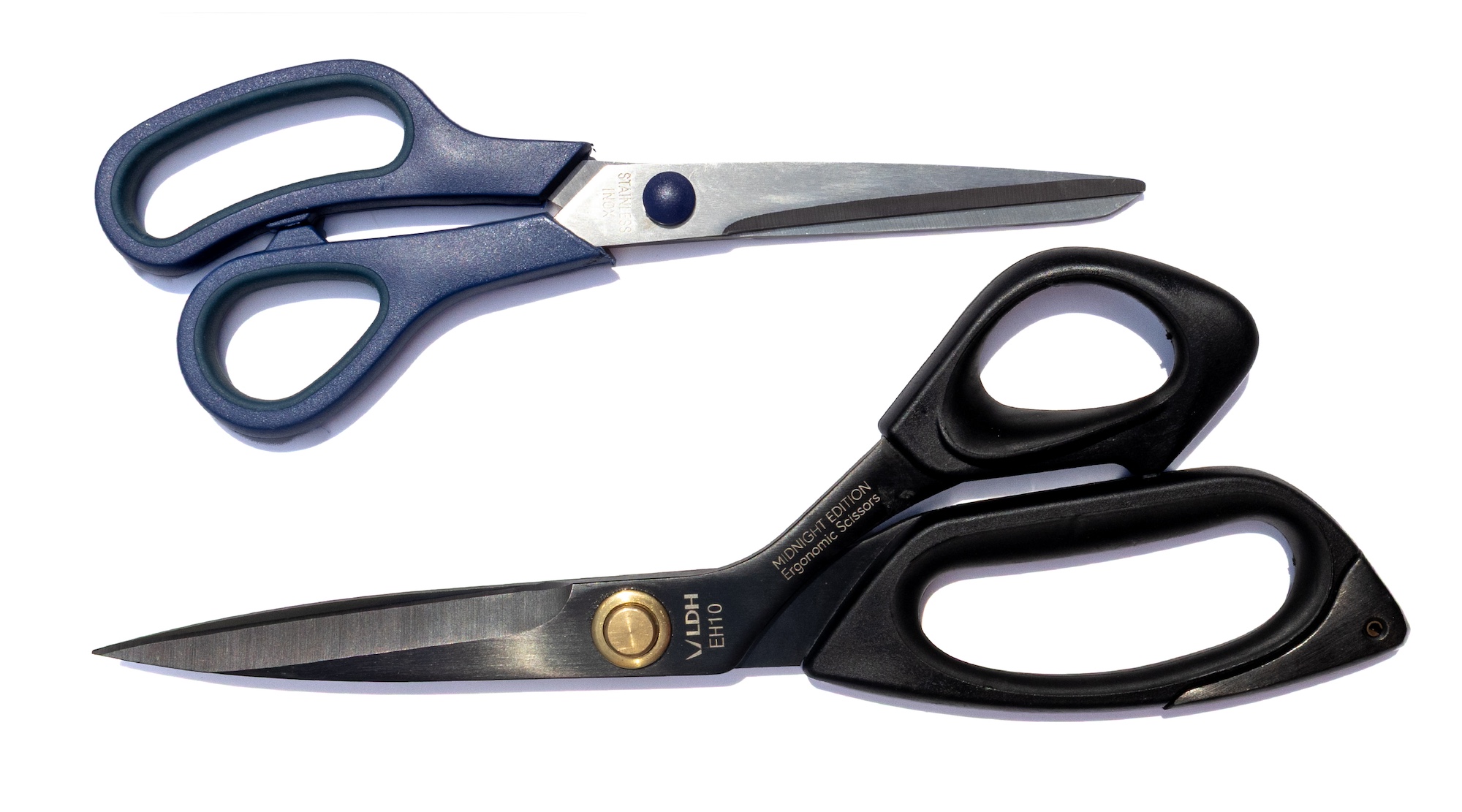
Why Fabric Shears Cost More Than Household Scissors
Household scissors are expected to cut many different materials, while fabric shears are designed for one very specific job.
Creating clean, consistent cuts through fabric requires tighter manufacturing tolerances, more precise blade alignment, and materials capable of maintaining that precision over time. The result is a tool that feels fundamentally different the moment you begin cutting.
Final Thoughts: TLDR
Premium fabric scissors aren't expensive because they're designed to look impressive. They're expensive because every stage of their construction demands higher-quality materials, more skilled labour, and greater attention to detail. From the steel itself to the final blade adjustment, every decision influences how the scissors feel in your hand and how they perform over years of creative work.
Leave a comment