


Can You Use Fabric Scissors to Cut Paper? The Truth Every Sewist Should Know

If you’ve spent any time sewing, you’ve probably heard this rule more than once: never use your fabric scissors to cut paper. It’s one of those crafting commandments that gets passed down almost like folklore, usually followed by a slightly dramatic warning about “ruining your scissors forever.” But like most things in the sewing world, the truth is a little more nuanced and, honestly, a lot more interesting. Let’s take a closer look at what’s actually happening when you cut paper with fabric scissors, and why this long-standing advice exists in the first place.
It’s Not Just Paper… It’s What’s In the Paper
At first glance, paper seems harmless: it’s thin, lightweight, and easy to cut. Compared to thick fabric or layered materials, it doesn’t seem like it should pose much of a threat to your scissors. But paper isn’t just compressed plant fibres. During manufacturing, most paper is treated with coatings and filled with mineral-based additives like talc or kaolin clay. These materials help improve the paper’s texture, brightness, and printability. In other words, they’re what give paper that smooth, crisp finish. But here’s where things shift. Those mineral particles, even though they’re incredibly fine, are much harder than natural fibres like cotton. So when you cut paper, you’re not just slicing through soft pulp, you’re also cutting through microscopic mineral content. Over time, that repeated contact is what can wear down the fine edge of your blades.
What Happens to Your Scissors When You Cut Paper
To understand why this matters, it helps to think about how fabric scissors are designed.
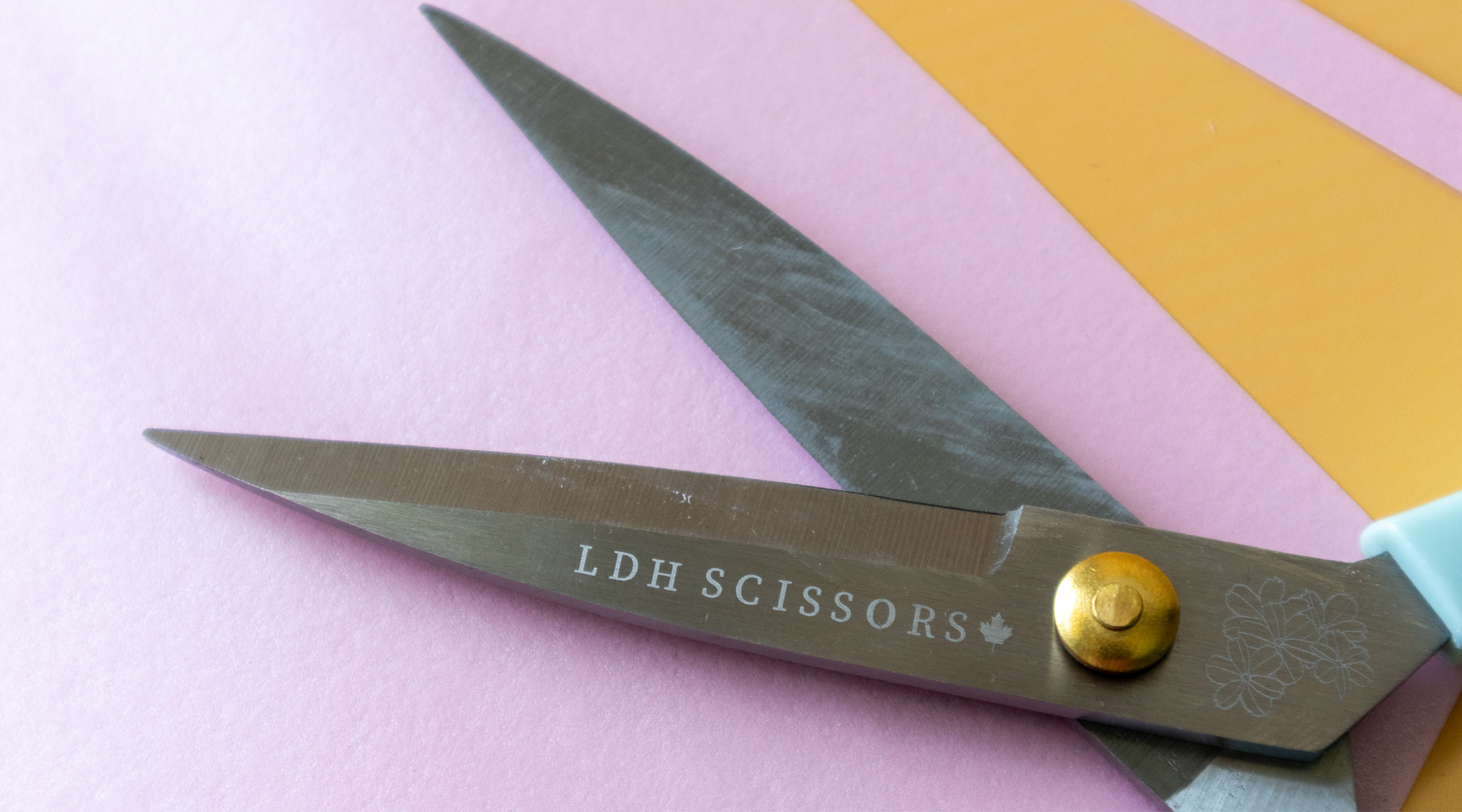
High-quality fabric scissors are sharpened to a very fine edge, allowing them to glide cleanly through fibres without snagging or pulling. This sharpness is what gives you those smooth, precise cuts, which is especially important when working with delicate or expensive fabrics.
When you cut through paper, particularly coated paper, those tiny mineral particles act almost like a very mild abrasive that's left behind on the scissor blades. Not enough to damage your scissors instantly, but enough to gradually wear down that finely honed edge. It’s less like snapping a blade and more like slowly sanding it down over time.
And once that edge starts to dull, you may notice:
- fabric beginning to slip instead of being cut cleanly
- frayed or uneven edges
- increased effort needed to make the same cuts
It’s a subtle shift at first, but one that becomes more noticeable the more you sew!
Natural Fibres vs. Synthetic and Coated Materials
This is where the conversation becomes a bit broader. The original advice about not cutting paper is rooted in a larger principle: what you cut affects how long your scissors stay sharp.
Natural fibres like cotton or linen are relatively gentle on blades. In contrast, synthetic materials, stabilizers, interfacing, and coated surfaces (like paper) tend to be more abrasive. So while paper often gets singled out, it’s really part of a bigger category of materials that can contribute to dulling over time.
So… Can You Use Fabric Scissors to Cut Paper?
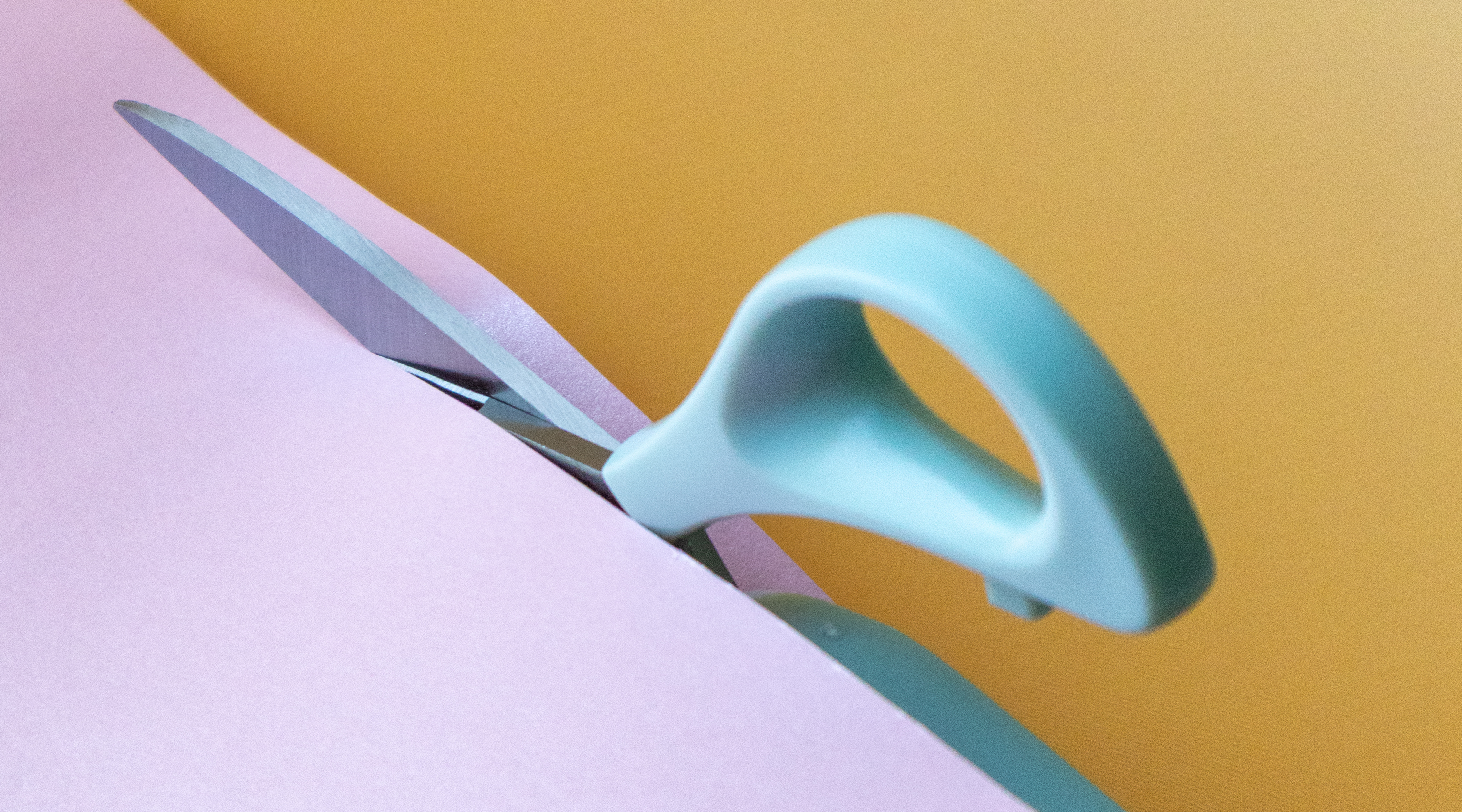
Technically, yes. Cutting paper once or twice won’t ruin your scissors. There’s no instant damage that happens the moment paper meets blade. But as a regular habit, it’s not recommended.
If you want your fabric scissors to stay sharp and perform at their best, it’s worth reserving them for fabric only and keeping a separate pair of scissors for paper and other materials. Think of it less as a strict rule and more as a way of protecting the quality of your tools over time.
Simple Ways to Care for Your Fabric Scissors
If you’ve invested in a good pair of fabric scissors, a little care can go a long way in maintaining their performance.
Here are a few simple habits that make a noticeable difference:
- Keep them clean: Wipe your blades regularly to remove lint, dust, or residue
- Oil the pivot: A small drop of oil at the pivot helps maintain smooth movement
- Store them safely: Avoid tossing them into drawers where they can get knocked around
- Use them intentionally: Reserve them for fabric to preserve their sharp edge
If you’re looking for a more in-depth guide, we’ve shared our full approach to tool care in our blog post on keeping your scissors in tip-top shape. You can find that blog post here.
A Tool That Works With You
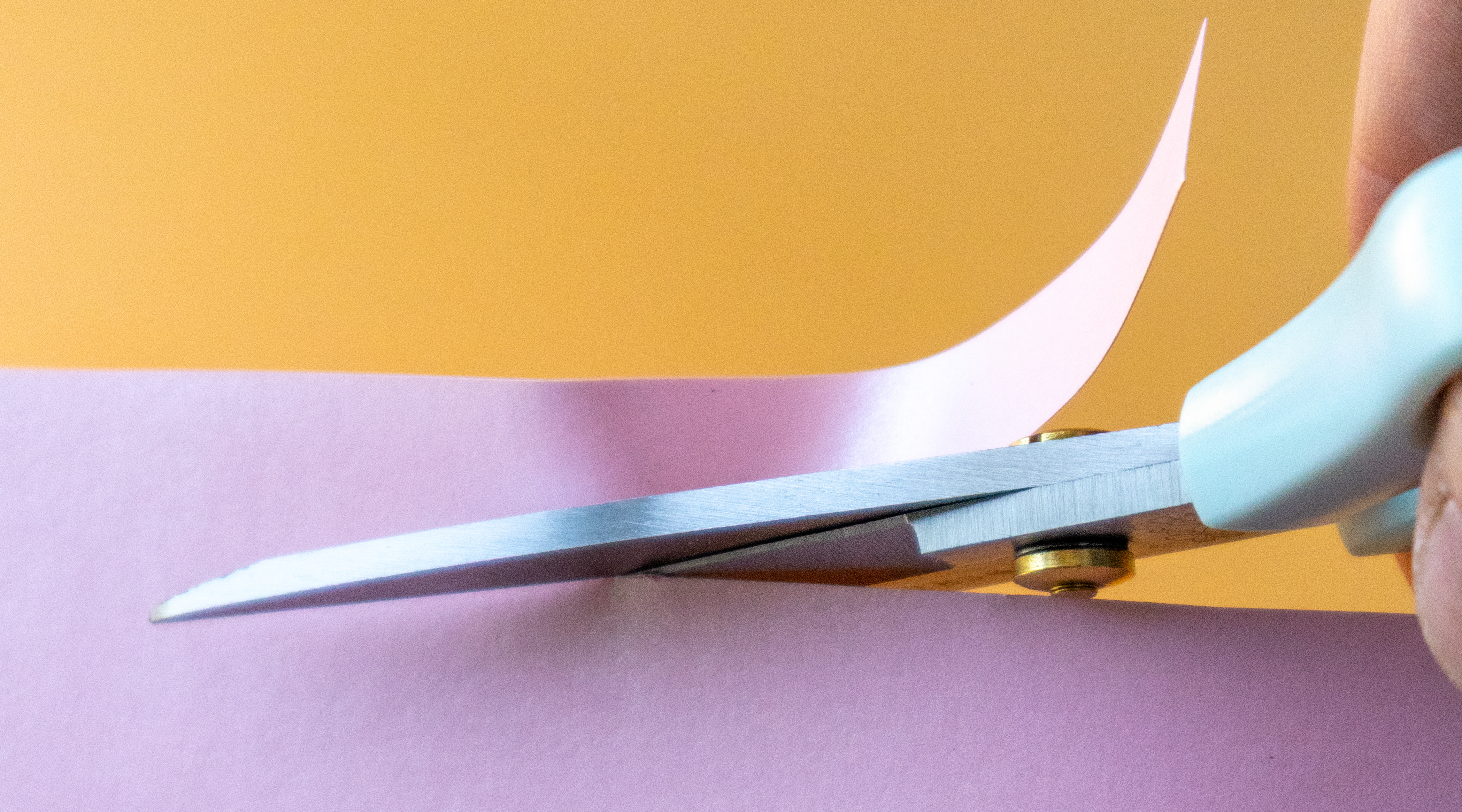
At the end of the day, sewing is full of small, thoughtful choices. The tools you use, how you care for them, and the way they support your process all add up. Fabric scissors are one of those tools that, when treated well, can last for years and continue to deliver the kind of clean, satisfying cuts that make sewing feel effortless. So while cutting paper won’t instantly ruin them, giving your fabric scissors a little respect and a dedicated role in your toolkit will always pay off in the long run!
Leave a comment